First Atlantic crossing
Christopher Columbus · 1492 CE – 1493 CE · Earth
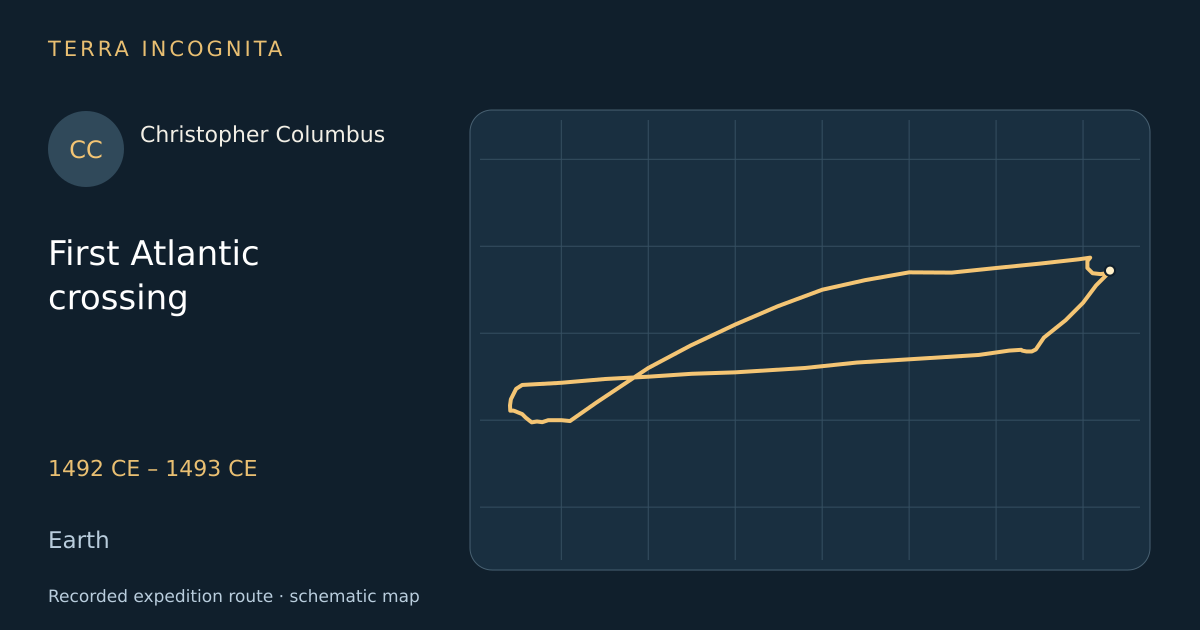
Reach Asia by sailing west.
Historical context
Europe's demand for Asian spices and gold met a new confidence after the Reconquista. Columbus's Atlantic crossing began the contact between two worlds — and the colonisation, enslavement and disease that followed.
The voyage, step by step
Departure from Palos
3 August 1492
Three ships — Santa María, Pinta and Niña — leave the Andalusian coast on 3 August 1492.
Refit in the Canaries
1492 CE
The fleet repairs the Pinta's rudder and takes on water and provisions before striking west.
Into the Sargasso Sea
1492 CE
Weeks from land, the crews grow fearful as the compass needle drifts and seaweed thickens on the water.
Landfall at Guanahani
12 October 1492
On 12 October 1492 a lookout sighted land in the Bahamas; Columbus named it San Salvador.
Cuba and the search for gold
1492 CE
Believing he had reached Asia, Columbus follows the Cuban coast and sends envoys inland.
Wreck of the Santa María
1492 CE
On Christmas night 1492 the flagship ran aground off Hispaniola; its timbers built the fort of La Navidad.
Return to Spain
March 1493
A storm drives the Niña to Lisbon before Columbus reaches Palos in March 1493 and reports to the court.
Outcome
Made landfall in the Bahamas and reached the Caribbean.
Christopher Columbus
Genoese navigator who crossed the Atlantic in 1492 in search of Asia and reached the Americas, opening sustained European contact.
Sources
Continue exploring
- The voyage of the MatthewJohn Cabot · 1497 CE
- Voyage to the CapeBartolomeu Dias · 1487 CE – 1488 CE
- First voyage to IndiaVasco da Gama · 1497 CE – 1499 CE
- Indian Ocean pilotageAhmad ibn Mājid · 1498 CE